
Cohort 1
-
Maegan Anderson
Research interests:Renormalisation and Unitarity in QFTsInstitution:University of EdinburghI am currently interested in trying to understand indefinite metric field theories, focusing on a higher-derivative scalar field. So far this has involved investigating potential ghosts using perturbation theory.
I am currently interested in trying to understand indefinite metric field theories, focusing on a higher-derivative scalar field. So far this has involved investigating potential ghosts using perturbation theory.
-
Sophie Bleau
 Research interests:Computing the Walls and Moduli Spaces for Bridgeland Stability in Higher DimensionsInstitution:University of Edinburgh
I am a second year PhD student working with Antony Maciocia on computing the walls and moduli spaces for Bridgeland stability in higher dimensions.
A fun fact about myself is that I have driven an Edinburgh tram!
I am a second year PhD student working with Antony Maciocia on computing the walls and moduli spaces for Bridgeland stability in higher dimensions.
A fun fact about myself is that I have driven an Edinburgh tram!
-
Tudor-Ioan Caba
Research interests:Construction of Topological Quantum Field TheoriesInstitution:University of EdinburghI am interested in topological quantum field theory, homotopy theory, and symplectic geometry. I’m currently thinking about Rozansky-Witten theory.Fun Fact: I can only spin counterclockwise.I am interested in topological quantum field theory, homotopy theory, and symplectic geometry. I’m currently thinking about Rozansky-Witten theory.Fun Fact: I can only spin counterclockwise. -
João Camarneiro
 Research interests:Quantitative Symplectic GeometryInstitution:University of EdinburghI am interested in symplectic geometry and other closely related topics. My work is focused on quantitative symplectic geometry, particularly symplectic embedding problems. Currently, I am looking at the question of existence of “infinite staircases”, a phenomenon which arises in some instances of this kind of problems. Some other tools that are useful in this context and which I am interested in include almost toric fibrations (ATFs) and embedded contact homology (ECH).Fun Fact: I studied the pipe organ for many years.I am interested in symplectic geometry and other closely related topics. My work is focused on quantitative symplectic geometry, particularly symplectic embedding problems. Currently, I am looking at the question of existence of “infinite staircases”, a phenomenon which arises in some instances of this kind of problems. Some other tools that are useful in this context and which I am interested in include almost toric fibrations (ATFs) and embedded contact homology (ECH).Fun Fact: I studied the pipe organ for many years.
 -
Alexandra Ciotau
 Research interests:How Non-noetherian is the Enveloping Algebra of the Witt Algebra?Institution:University of EdinburghI have a strong interest in non-commutative algebra and focus on enveloping algebras of the Witt algebra.Fun Fact: Outside of work, I love discovering new places and trying different cuisines.I have a strong interest in non-commutative algebra and focus on enveloping algebras of the Witt algebra.Fun Fact: Outside of work, I love discovering new places and trying different cuisines.
 -
Noah Dizep
 Research interests:Geometry and Quantum Field TheoryInstitution:Heriot-Watt University
I am interested in the mathematics describing modern Quantum Field Theory, especially in tackling problems present in String Theory using tools from Algebraic- and specifically Enumerative Geometry.
Fun Fact: Outside of academia, I enjoy playing chess, tennis and making music.
I am interested in the mathematics describing modern Quantum Field Theory, especially in tackling problems present in String Theory using tools from Algebraic- and specifically Enumerative Geometry.
Fun Fact: Outside of academia, I enjoy playing chess, tennis and making music.
-
Simeon Hellsten
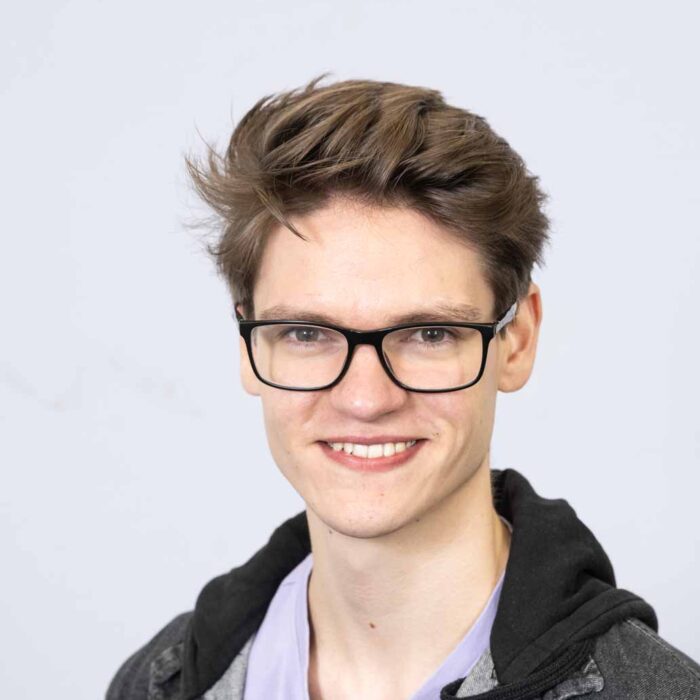 Research interests:Concordance of Surfaces in 4-manifoldsInstitution:University of Glasgow
I’m interested in geometric and low-dimensional topology, particularly in dimension 4. Right now, I’m looking at embedded surfaces in 4-manifolds, which is like a higher dimensional version of knot theory.
Fun fact: I’m also very involved in Linguistics Olympiads!
I’m interested in geometric and low-dimensional topology, particularly in dimension 4. Right now, I’m looking at embedded surfaces in 4-manifolds, which is like a higher dimensional version of knot theory.
Fun fact: I’m also very involved in Linguistics Olympiads!
-
Ander Martin Iribar
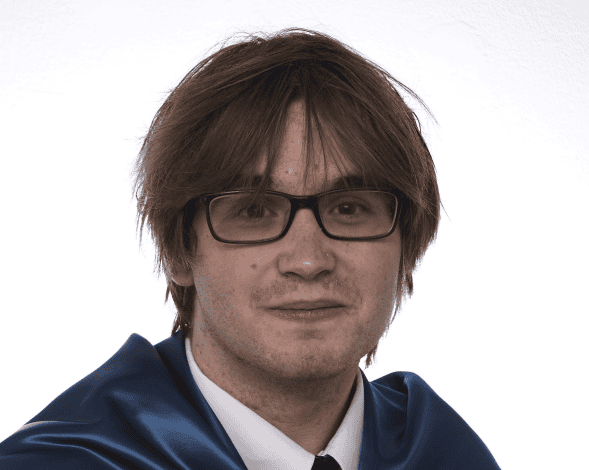 Research interests:Arithmetic GeometryInstitution:University of EdinburghI am interested in arithmetic geometry. Currently, I am trying to understand ideas revolving around the Chabauty-Kim method.Fun Fact: I like playing board games and watching animal videos.I am interested in arithmetic geometry. Currently, I am trying to understand ideas revolving around the Chabauty-Kim method.Fun Fact: I like playing board games and watching animal videos.
 -
Shing Tak Lam
Research interests:The Geometry of Families of Vector BundlesInstitution:University of Glasgow (Aligned)I am interested in the interactions between differential geometry, algebraic geometry and geometric analysis. Currently, I am studying Hermite-Einstein metrics on holomorphic vector bundles.
Fun Fact: Outside of work, I enjoy video games, board games and cooking.I am interested in the interactions between differential geometry, algebraic geometry and geometric analysis. Currently, I am studying Hermite-Einstein metrics on holomorphic vector bundles.
Fun Fact: Outside of work, I enjoy video games, board games and cooking. -
Isky Trevor Matthews
Research interests:Inherent Topological Structure in Category TheoryInstitution:University of EdinburghMy research interests lie in some interaction between category theory, logic and geometry.
Fun Fact: Outside of maths, I like linguistics, going scuba diving and singing in choirs.
My research interests lie in some interaction between category theory, logic and geometry.
Fun Fact: Outside of maths, I like linguistics, going scuba diving and singing in choirs.
-
Djordje Mihajlovic
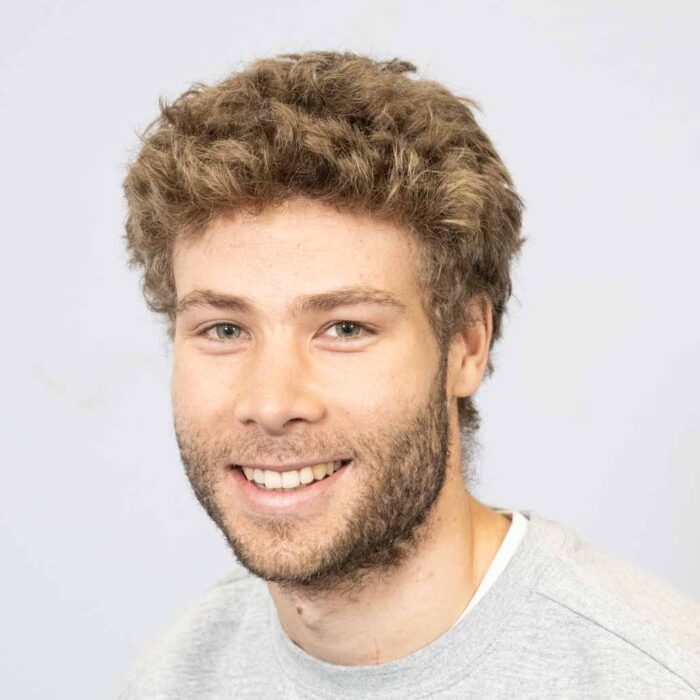 Research interests:Machine Learning Knot InvariantsInstitution:University of EdinburghPrimarily, I am interested in using machine learning in conjunction with knot theoretic tools to learn more about problems in protein folding, as well as finding unknown relationships between known knot invariants.Fun Fact: A fun fact about me is that when I’m not at my desk I love exploring! I have climbed Kilimanjaro in Tanzania and the Annapurna circuit in Nepal.Primarily, I am interested in using machine learning in conjunction with knot theoretic tools to learn more about problems in protein folding, as well as finding unknown relationships between known knot invariants.Fun Fact: A fun fact about me is that when I’m not at my desk I love exploring! I have climbed Kilimanjaro in Tanzania and the Annapurna circuit in Nepal.
 -
Ema Mlinar
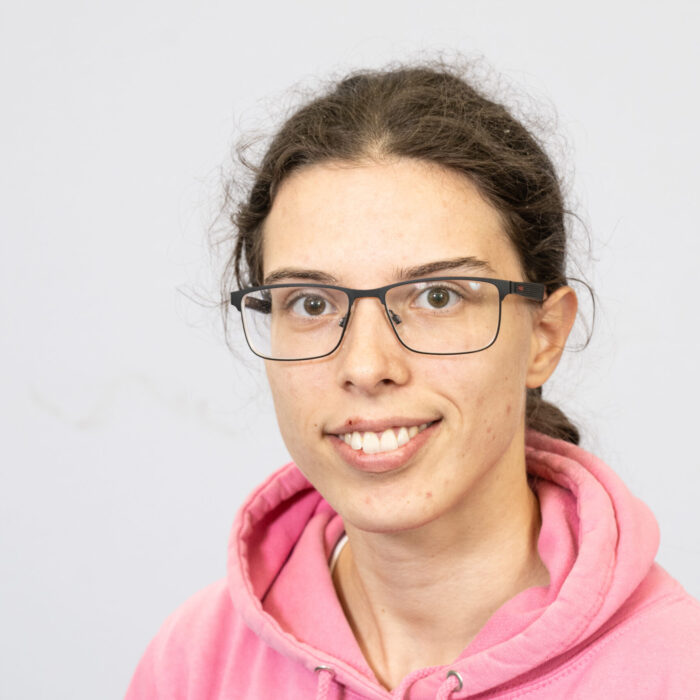 Research interests:Twistor Theory and Strong Background FieldsInstitution:University of EdinburghI am interested in mathematical physics, currently I work on twistor theory.Fun Fact: I love hiking and climbing.I am interested in mathematical physics, currently I work on twistor theory.Fun Fact: I love hiking and climbing.
 -
Sean O'Brien
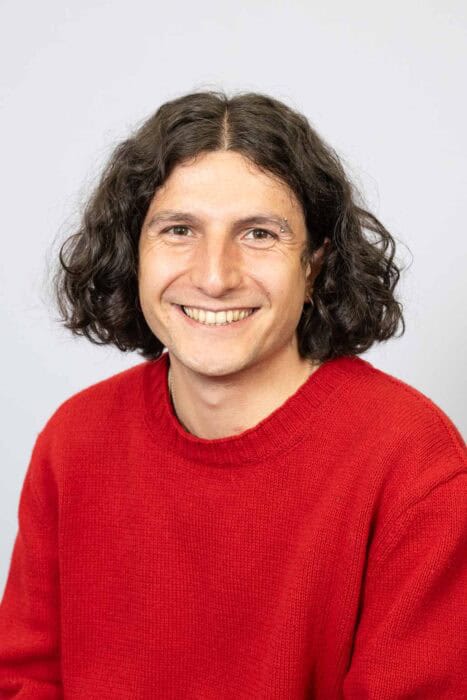 Research interests:Combinatorial Geometry and Topology of Discrete GroupsInstitution:University of Glasgow
My project will use combinatorial techniques from algebraic topology and geometric group theory to study discrete groups. It will start with using discrete more theory to study the topology of interval posets. These methods will then be adapted to investigate computational and word processing problems for discrete groups such as Artin, Coxeter, and mapping class groups.
My project will use combinatorial techniques from algebraic topology and geometric group theory to study discrete groups. It will start with using discrete more theory to study the topology of interval posets. These methods will then be adapted to investigate computational and word processing problems for discrete groups such as Artin, Coxeter, and mapping class groups.
-
Theresa Ortscheidt
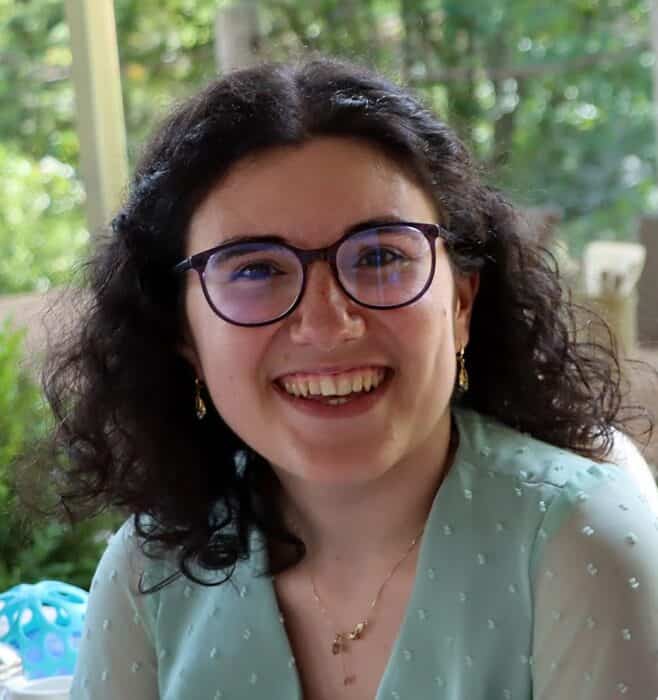 Research interests:Lattice Models and Representation TheoryInstitution:University of GlasgowI am working in representation theory, specifically, my project is focused on solvable lattice models and similar combinatorial tools that are used to study various objects in connection to geometry, mathematical physics and number theory. At the moment, I am interested in crystal graphs, specifically Demazure crystals.Fun Fact: After work, I play tabletop rpgs with my friends because sometimes slaying dragons is easier than doing algebra.I am working in representation theory, specifically, my project is focused on solvable lattice models and similar combinatorial tools that are used to study various objects in connection to geometry, mathematical physics and number theory. At the moment, I am interested in crystal graphs, specifically Demazure crystals.Fun Fact: After work, I play tabletop rpgs with my friends because sometimes slaying dragons is easier than doing algebra.
 -
Alicja Pietrzak
Research interests:Braid groups and related structuresInstitution:University of GlasgowExternal link:https://sites.google.com/view/alicja-pietrzak/homeMy research interests are in the area of Geometric Group Theory. Currently, I am particularly interested in the question if braid groups are CAT(0) and if that can be proven by considering a certain complex on which they act.Fun fact: I love 100% chocolate and buy tea at a faster rate than I drink it.My research interests are in the area of Geometric Group Theory. Currently, I am particularly interested in the question if braid groups are CAT(0) and if that can be proven by considering a certain complex on which they act.Fun fact: I love 100% chocolate and buy tea at a faster rate than I drink it. -
Ruth Raistrick
 Research interests:Algebraic Number TheoryInstitution:University of GlasgowMy research interests lie in algebraic number theory. I spend most of my time working on the arithmetic statistics of the Galois module structure of unit groups of number fields; but I also have an interest in arithmetic geometry.In my spare time, I love hiking, board games and cross stitch.My research interests lie in algebraic number theory. I spend most of my time working on the arithmetic statistics of the Galois module structure of unit groups of number fields; but I also have an interest in arithmetic geometry.In my spare time, I love hiking, board games and cross stitch.
 -
Lorna Richardson
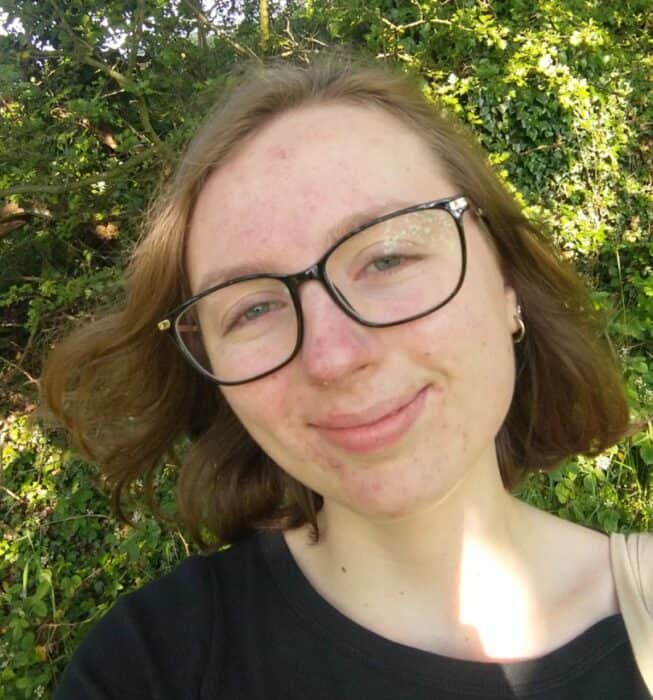 Research interests:Groups, Geometry and AutomataInstitution:University of GlasgowMy research is in geometric group theory, specifically groups of asynchronous automata.Fun Fact: If I’m not doing maths, you will probably find me playing violin in an orchestra somewhere.My research is in geometric group theory, specifically groups of asynchronous automata.Fun Fact: If I’m not doing maths, you will probably find me playing violin in an orchestra somewhere.
 -
Emanuel Roth
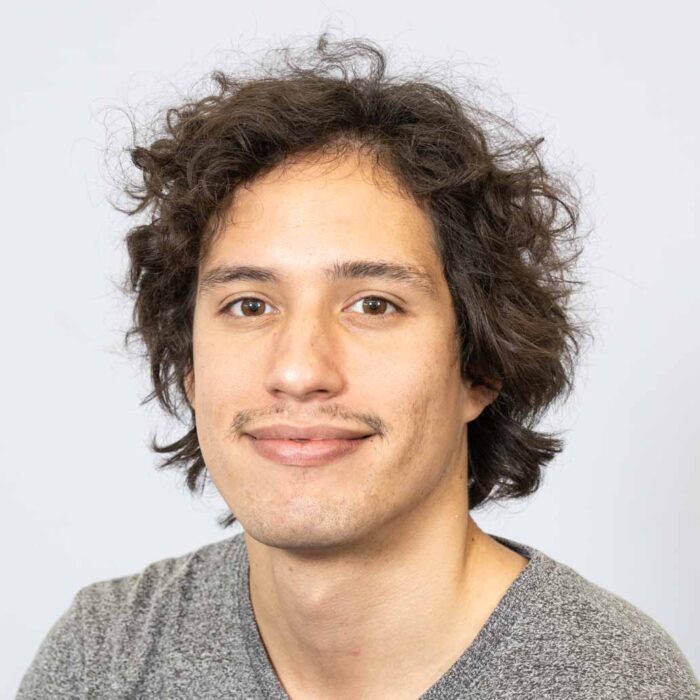 Research interests:A Symplectic Approach to Global Springer TheoryInstitution:University of EdinburghI am interested in the geometry of moduli spaces of vector bundles and Higgs bundles, and nonabelian Hodge theory.Fun Fact: I love to play piano! I play regularly and prefer to improvise on piano than play pieces.I am interested in the geometry of moduli spaces of vector bundles and Higgs bundles, and nonabelian Hodge theory.Fun Fact: I love to play piano! I play regularly and prefer to improvise on piano than play pieces.
 -
Willoughby Seago
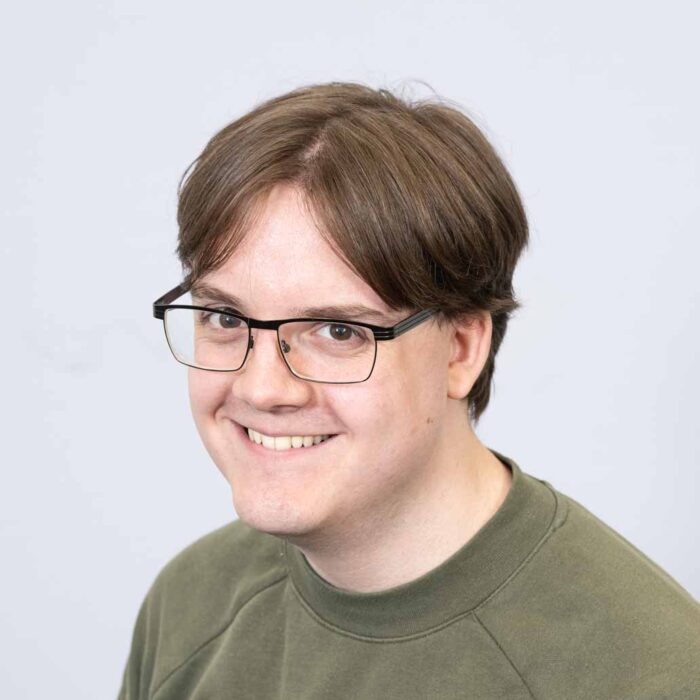 Research interests:Algebraic and Combinatorial Structures of Integrable ModelsInstitution:University of Glasgow (Aligned)
My project will initially look at the interplay of lattice models from statistical mechanics (e.g. the six-vertex or ice model) and integrable PDEs, such as the KP hierarchy, using the boson-fermion correspondence. The aim is to find new algebraic and combinatorial descriptions of the solutions of these hierarchies, called tau-functions, using the combinatorics of lattice models in the fermionic Fock space. This will involve techniques from algebra and combinatorics, such as the ring of symmetric functions, vertex operators and infinite rank Lie algebras, but also determinant formulae and their combinatorics needed in the description of soliton solutions. Possible advanced topics include the role of cluster algebras describing the n-soliton solutions and/or the extension to non-commutative integrable systems.
My project will initially look at the interplay of lattice models from statistical mechanics (e.g. the six-vertex or ice model) and integrable PDEs, such as the KP hierarchy, using the boson-fermion correspondence. The aim is to find new algebraic and combinatorial descriptions of the solutions of these hierarchies, called tau-functions, using the combinatorics of lattice models in the fermionic Fock space. This will involve techniques from algebra and combinatorics, such as the ring of symmetric functions, vertex operators and infinite rank Lie algebras, but also determinant formulae and their combinatorics needed in the description of soliton solutions. Possible advanced topics include the role of cluster algebras describing the n-soliton solutions and/or the extension to non-commutative integrable systems.
-
Siddharth Setlur
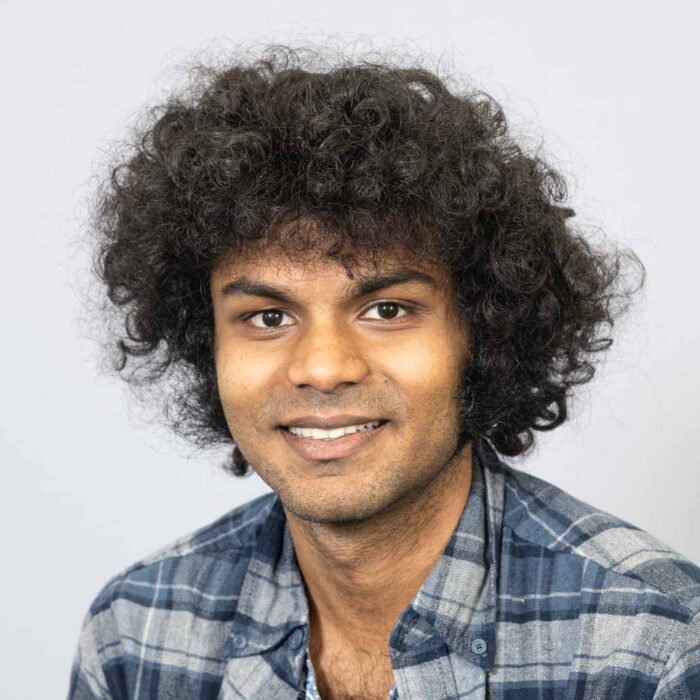 Research interests:Categorical Probability and Applied Topology in Causal InferenceInstitution:University of Edinburgh
In my project, we study category theoretic and topological approaches to developing more general models in causal inference. We aim to extend the causal inference framework within categorical probability theory to time-varying data, and investigate how tools from applied topology such as sheaves on graphs or quiver representations can be used to model causal phenomena.
In my project, we study category theoretic and topological approaches to developing more general models in causal inference. We aim to extend the causal inference framework within categorical probability theory to time-varying data, and investigate how tools from applied topology such as sheaves on graphs or quiver representations can be used to model causal phenomena.
-
Emmanouil Sfinarolakis
Research interests:Quantitative AlgebraInstitution:Heriot-Watt UniversityMy research interests lie in Foundations, Logic, Algebra and Combinatorics; most of the time in their union, quite often in their intersection, and occasionally all over the place. Currently exploring Quantitative Algebra.
My research interests lie in Foundations, Logic, Algebra and Combinatorics; most of the time in their union, quite often in their intersection, and occasionally all over the place. Currently exploring Quantitative Algebra.
-
Talia Shlomovich
Research interests:Morse Boundaries, Hyperbolicity and Random GroupsInstitution:Heriot-Watt UniversityI am currently interested in the Morse boundary and constructing Coxeter groups whose Morse boundaries exhibit specific topological properties. In particular, I am working with the Sierpiński carpet and the Menger curve, which are fractal-like topological spaces that arise as Morse boundaries. I am also broadly interested in quantitative and probabilistic methods in geometric group theory. Previously, I worked on a quantitative version of guessing geodesics, a set of conditions ensuring that a given metric space is hyperbolic, and obtained an explicit hyperbolicity constant.
Fun fact: I used to do rifle shooting competitively (and hoping to get back into it in Edinburgh!)
I am currently interested in the Morse boundary and constructing Coxeter groups whose Morse boundaries exhibit specific topological properties. In particular, I am working with the Sierpiński carpet and the Menger curve, which are fractal-like topological spaces that arise as Morse boundaries. I am also broadly interested in quantitative and probabilistic methods in geometric group theory. Previously, I worked on a quantitative version of guessing geodesics, a set of conditions ensuring that a given metric space is hyperbolic, and obtained an explicit hyperbolicity constant.
Fun fact: I used to do rifle shooting competitively (and hoping to get back into it in Edinburgh!)
-
Lucy Spouncer
Research interests:Higher categories and Topological Quantum Field TheoriesInstitution:University of EdinburghThis project will study homotopical and higher algebraic structures that appear in quantum field theories.
This project will study homotopical and higher algebraic structures that appear in quantum field theories.
-
Hidde Stoffels
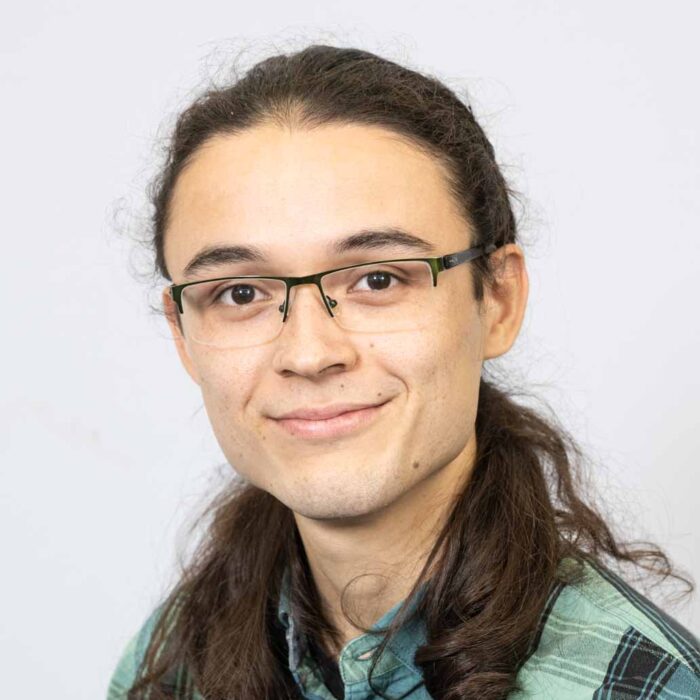 Research interests:Non-Perturbative Aspects of Field TheoryInstitution:Heriot-Watt UniversityI am interested in physics at very small and very big scales, in particular quantum field theory and gravitation. Currently, I am researching conformal field theories, a type of quantum field theory; ultimately, I hope to reconnect to gravitation through e.g. the holographic principle.Fun Fact: A fun fact about me is that I love learning languages, although so far I have only managed to teach myself some Esperanto.I am interested in physics at very small and very big scales, in particular quantum field theory and gravitation. Currently, I am researching conformal field theories, a type of quantum field theory; ultimately, I hope to reconnect to gravitation through e.g. the holographic principle.Fun Fact: A fun fact about me is that I love learning languages, although so far I have only managed to teach myself some Esperanto.
 -
Susanna Terron
Research interests:Quantum Symmetries in Diagram Algebras and Topological Quantum Field TheoryInstitution:University of GlasgowMy research interests are in low dimension topology, quantum invariants, group theory, and representation theory. I am interested in areas where these topics come together in various ways.
At the moment I’m looking into Thompson knot theory, and I am always happy to talk about different topics in math!Fun Fact: I love travelling, so if ever need a travel buddy and you ask me I am likely to say yes.My research interests are in low dimension topology, quantum invariants, group theory, and representation theory. I am interested in areas where these topics come together in various ways.
At the moment I’m looking into Thompson knot theory, and I am always happy to talk about different topics in math!Fun Fact: I love travelling, so if ever need a travel buddy and you ask me I am likely to say yes. -
Francesco Tesolin
 Research interests:Inverse Semigroups, Topological Groupoids and Non-commutative Stone DualityInstitution:Heriot-Watt UniversityExternal link:https://sites.google.com/view/ftesolin/
The aim of my project is to classify the Boolean inverse monoids, these are inverse semigroups which generalise Boolean algebras. The main inspiration in working on this classification comes from the non-commutative Stone duality between the category of Boolean inverse monoids and the category of étale groupoids. In recent years there has been plenty of results in étale groupoid homology and I wish to use these to develop a homology theory for the Boolean inverse monoids. To this end, I am interested in the representation theory of Boolean inverse monoids and étale groupoids, and their relation to sheaves. This work will also have applications in C*-algebra theory.
The aim of my project is to classify the Boolean inverse monoids, these are inverse semigroups which generalise Boolean algebras. The main inspiration in working on this classification comes from the non-commutative Stone duality between the category of Boolean inverse monoids and the category of étale groupoids. In recent years there has been plenty of results in étale groupoid homology and I wish to use these to develop a homology theory for the Boolean inverse monoids. To this end, I am interested in the representation theory of Boolean inverse monoids and étale groupoids, and their relation to sheaves. This work will also have applications in C*-algebra theory.
-
Ioannis Georgios Vogiatzis
Research interests:Explorations in the kinematical Erlanger programInstitution:University of EdinburghKlein’s Erlanger Program was an influential approach to geometry via symmetry. Klein geometries were “static”. Adding time into the fold, results in a kinematical Erlanger program which, roughly speaking, exploits the beautiful interplay between different homogeneous spaces of kinematical Lie groups to describe the dynamics of particles and fields. The precise project, to be determined later in conversation with Ioannis, will be set in this context.
Klein’s Erlanger Program was an influential approach to geometry via symmetry. Klein geometries were “static”. Adding time into the fold, results in a kinematical Erlanger program which, roughly speaking, exploits the beautiful interplay between different homogeneous spaces of kinematical Lie groups to describe the dynamics of particles and fields. The precise project, to be determined later in conversation with Ioannis, will be set in this context.
-
Yaoqi Yang
Research interests:Stability of varieties and linear systemsInstitution:University of Glasgow (Aligned)The fundamental objects of algebraic geometry are spaces defined by polynomial equations, called algebraic varieties. The main goal of algebraic geometry is ultimately the classification of algebraic varieties. Recent developments have explained that in order for this question to be tractable, one must restrict to a nicer class of “stable” varieties. For this more well-behaved class of varieties, it is expected that one can classify them into parameter spaces called moduli spaces. An important aspect of the theory is then to understand of the geometry of these moduli spaces.
The fundamental objects of algebraic geometry are spaces defined by polynomial equations, called algebraic varieties. The main goal of algebraic geometry is ultimately the classification of algebraic varieties. Recent developments have explained that in order for this question to be tractable, one must restrict to a nicer class of “stable” varieties. For this more well-behaved class of varieties, it is expected that one can classify them into parameter spaces called moduli spaces. An important aspect of the theory is then to understand of the geometry of these moduli spaces.